What Is Mature Skin? Signs, Age & the Best Ways to Support Stronger, Healthier Skin

There’s a moment when your skincare routine quietly stops being about trends and starts becoming about standards.
Usually, it happens somewhere between realizing your under-eyes suddenly look more tired than you feel, your once-reliable moisturizer no longer cuts it, and the phrase “glass skin” starts sounding less aspirational and more exhausting.
Welcome to the conversation around mature skin; a term that’s often misunderstood, over-marketed, and wrapped in unnecessary panic.
At Infuse, we’re not interested in fear-based beauty. We’re interested in skin that stays strong, resilient, and intelligent over time. Because mature skin isn’t “bad” skin. It’s skin that has evolved through stress, ambition, sun exposure, sleepless nights, reinventions, and real life.
And frankly? That deserves better than gimmicks.
What Is Mature Skin?
The term “mature skin” refers to skin that has begun experiencing natural structural and functional changes over time. These changes are influenced by age, genetics, hormones, stress, environmental exposure, and lifestyle habits.
Unlike oily or dry skin, mature skin is not technically a skin type. It’s a skin condition that can affect anyone, regardless of whether their skin is naturally combination, sensitive, or acne-prone.
If you’ve ever wondered what is considered mature skin, the answer is less about a specific birthday and more about how your skin behaves.
Common signs of mature skin include:
- Fine lines and wrinkles
- Reduced firmness and elasticity
- Dryness or dehydration
- Dullness
- Uneven texture
- Increased sensitivity
- Slower recovery after irritation
- More visible pigmentation or sun damage
In simple terms, mature skin means your skin is producing less of the things that once kept it naturally firm, hydrated, and resilient.
And yes; your skin can still look vibrant, healthy, and incredibly beautiful. Just with a little more strategy involved.
At What Age Is Skin Considered Mature?
This is one of the most searched skincare questions online and understandably so.
The truth? There isn’t one universal age when skin suddenly becomes “mature.”
Most people begin noticing visible changes between their late 30s and mid-40s, but skin aging depends on much more than age alone.
Factors that influence maturing skin include:
- Sun exposure
- Stress levels
- Sleep quality
- Hormonal shifts
- Smoking
- Nutrition
- Genetics
- Skincare habits
Some people notice fine lines in their early 30s. Others maintain firmer-looking skin well into their 50s.
Your skin doesn’t wake up on your 40th birthday wearing beige linen and announcing retirement. Mature skin develops gradually; quietly and individually.
Which is exactly why smart skincare matters more than chasing trends.
Why Skin Changes Over Time
One of the biggest reasons mature skin behaves differently is the gradual decline of collagen production.
Collagen is the structural protein responsible for helping skin feel firm, smooth, and resilient. Starting in our mid-20s, natural collagen production slowly decreases each year.
At the same time:
- Cell turnover slows down
- Skin produces less oil
- Moisture retention weakens
- Elastin fibers become less efficient
- Environmental stress accumulates
Translation? Skin can start feeling thinner, drier, less radiant, and slower to bounce back.
This doesn’t mean your skin is failing. It means your skin needs different support than it did at 25. Kind of like your tolerance for tequila.
Characteristics of Mature Skin
Understanding mature skin characteristics helps you choose skincare that actually supports your skin instead of overwhelming it.
1. Fine Lines and Wrinkles
Expression lines around the eyes, mouth, and forehead become more visible as collagen and elastin decline.
This is especially common around the eye area, where skin is naturally thinner and more delicate.
If under-eye lines are becoming more noticeable, read Everything You Need to Know About Eye Wrinkles.
2. Dryness and Dehydration
Mature skin often produces less oil, making it easier for moisture to escape.
This can leave skin feeling:
- Tight
- Rough
- Flaky
- Less plump
Hydration becomes less about trendy face mists and more about maintaining a strong, healthy skin barrier.
3. Loss of Firmness
As structural proteins decline, skin may appear less lifted or defined over time.
This is one reason many people describe mature skin as looking “tired,” even when they’re functioning entirely on coffee and determination.
4. Dullness
Slower cell turnover means dead skin cells remain on the surface longer, which can reduce brightness and radiance.
The solution isn’t aggressive exfoliation. Mature skin responds far better to consistent support than chaos disguised as skincare advice.
5. Increased Sensitivity
Skin becomes more reactive as the barrier weakens.
Overusing harsh acids, over-exfoliating, or layering too many active ingredients can leave mature skin irritated rather than improved.
Your skin is asking for balance; not a hostile takeover.
The Eye Area: Where Mature Skin Often Shows First
The skin around the eyes is thinner and contains fewer oil glands than the rest of the face, which makes it one of the earliest places to show signs of aging. And unfortunately, stress has a habit of moving in there rent-free.
Common concerns include:
- Fine lines
- Crow’s feet
- Puffiness
- Dryness
- Loss of elasticity
This is where targeted hydration and antioxidant support become especially important.
Mate Radiance Eye Cream was designed to support the delicate eye area with intelligent hydration and ingredients that help skin look smoother, brighter, and more refreshed; without promising miracles or pretending you slept nine hours.
Because skincare should support your life, not gaslight it.

Ingredients That Actually Support Mature Skin
Mature skin doesn’t need a 14-step routine or products marketed like late-night infomercials.
It needs consistency, barrier support, and ingredients backed by real science.
Antioxidants
Antioxidants help protect skin against oxidative stress caused by pollution, UV exposure, and environmental damage.
One standout ingredient? Yerba mate.
Rich in polyphenols and naturally energizing compounds, yerba mate is known for its antioxidant properties and ability to help support healthier-looking skin.
Learn more about Yerbamate benefits for skin and why this ingredient has become a modern skincare favorite.
Peptides
Peptides help support skin structure and improve the appearance of firmness over time.
Think of them as subtle reinforcements rather than dramatic interventions. Very Fifth Avenue. Never Vegas.
Ceramides
Ceramides help strengthen the skin barrier and reduce moisture loss; especially important for mature skin that tends to become drier with age.
Hydrating Ingredients
Hydration is one of the biggest priorities for mature skin.
Ingredients like:
- Hyaluronic acid
- Glycerin
- Squalane
help maintain softness, comfort, and resilience.
A Smarter Night Routine for Mature Skin
Nighttime is when skin naturally shifts into repair mode, making evening skincare especially important for mature skin support.
A simplified routine often works best:
- Gentle cleanser
- Hydrating serum
- Barrier-supportive moisturizer
- Eye treatment
That’s it. Your bathroom counter doesn’t need to resemble a chemistry lab.
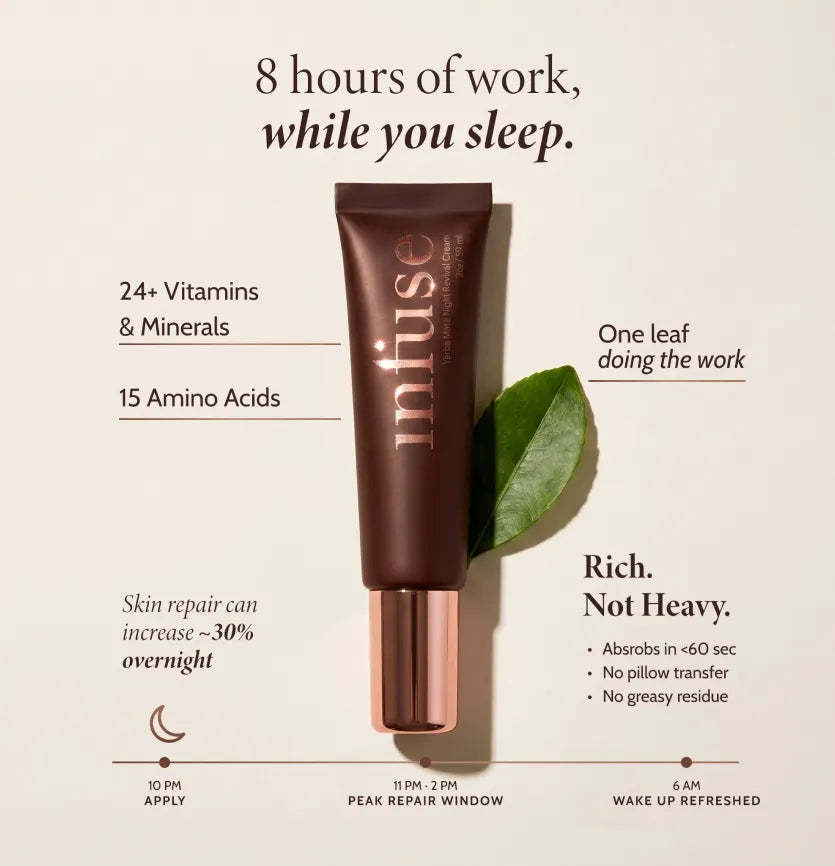
Yerba Mate Night Revival Cream fits beautifully into a mature skincare routine thanks to its nourishing texture and antioxidant-rich formula designed to support overnight recovery and hydration.
Because strong skin, much like great style, usually comes from consistency — not noise.
The Biggest Mistakes People Make With Mature Skin
Over-Exfoliating
Many people try to “scrub away” signs of aging, which often damages the skin barrier instead.
More aggressive does not equal more effective.
Following Every Trend Online
If your skincare advice changes every 48 hours because someone on TikTok discovered a new miracle ingredient, your skin is probably exhausted.
Mature skin thrives on consistency, not chaos.
Ignoring Sun Protection
UV exposure remains one of the biggest contributors to premature skin aging.
Daily sunscreen matters; even on cloudy days, even indoors near windows, even when you swear you’ll “only be outside for five minutes.”
Using Too Many Products
More products can increase irritation, especially for sensitive or mature skin.
Elegant simplicity almost always wins. Just like a black blazer. Or a good martini.
Mature Skin Is Not the End of Beauty; It’s the Evolution of It
The beauty industry has spent decades treating aging like a crisis. But mature skin isn’t a problem to solve.
It’s skin with history. Skin with endurance. Skin that has adapted through seasons of life most people don’t post about online.
And honestly? There’s something deeply powerful about caring for your skin from a place of respect instead of panic.
At Infuse, we believe skincare should feel intelligent, grounded, and quietly luxurious. Less trend-chasing. More long-term strength.
Because resilient beauty never goes out of style.
Refine Your Ritual. Strengthen Your Skin.
Mature skin doesn’t need fear-based marketing or impossible promises.
It needs formulas grounded in science, designed for real life, and created to support skin through every stage of evolution.
Explore skincare designed for vitality, resilience, and long-term skin strength:
Because real strength never needs an apology.
Refine Your Ritual. Strengthen Your Skin.
Mature skin isn’t something to fix; it’s something to support with intelligence, consistency, and respect.
At Infuse, we create skincare that doesn’t chase trends or sell fear. We build formulas designed for resilience, hydration, and long-term skin strength, because real beauty is never rushed, and never artificial.