In-Flight Skincare Guide: Why Airplane Air Dries Your Skin

Airplane air is extremely low in humidity (often below 20%) which disrupts your skin barrier and accelerates moisture loss. This leads to dryness, dullness, and sometimes breakouts.
The key to effective in-flight skincare is layering hydration, protecting the skin barrier, and using targeted ingredients that maintain balance during long flights.
Introduction
You board a flight with calm, balanced skin. You land looking… slightly undone. Sound familiar? It’s not jet lag; it’s physics.
Cabin air isn’t just dry; it’s aggressively dehydrating. And for skin that already works hard (especially mature skin) this environment can tip the balance fast.
This guide breaks down exactly why airplane air affects your skin, and more importantly, what to do about it; without turning your carry-on into a skincare lab.
Because skincare, like a great wardrobe, should travel well.
Why Is Airplane Air Bad for Your Skin?
Let’s get specific.
1. Low Humidity = Rapid Water Loss
Aircraft cabins typically have humidity levels between 10–20%. Your skin? It thrives closer to 40–60%.
That gap causes transepidermal water loss (TEWL); a scientific way of saying your skin is losing moisture faster than it can hold onto it.
2. Compromised Skin Barrier
When hydration drops, your skin barrier weakens. That leads to:
- Tightness
- Increased sensitivity
- Dull tone
- Fine lines becoming more visible
Related post: Post-Travel Breakouts
3. Circulation Slows Down
Sitting for long periods reduces blood flow, which can leave skin looking tired and uneven.
4. Stress + Travel Fatigue
Add disrupted sleep, dehydration, and altitude stress and suddenly your skin isn’t just dry, it’s reactive.
Why Is My Skin Bad After a Flight?
If you’ve ever wondered this mid-air, here’s the truth:
It’s not one factor; it’s a stack.
- Dehydration from cabin air
- Increased oil production (your skin compensating)
- Bacteria transfer (yes, touching your face matters)
- Sleep disruption affecting repair cycles
The result? Dry patches, breakouts, or that unmistakable “tired skin” look.
In-Flight Skincare: What Actually Works
Let’s keep this grounded. No 10-step routines at 35,000 feet.
Step 1: Start Clean (Before Boarding)
Use a gentle cleanser before your flight.
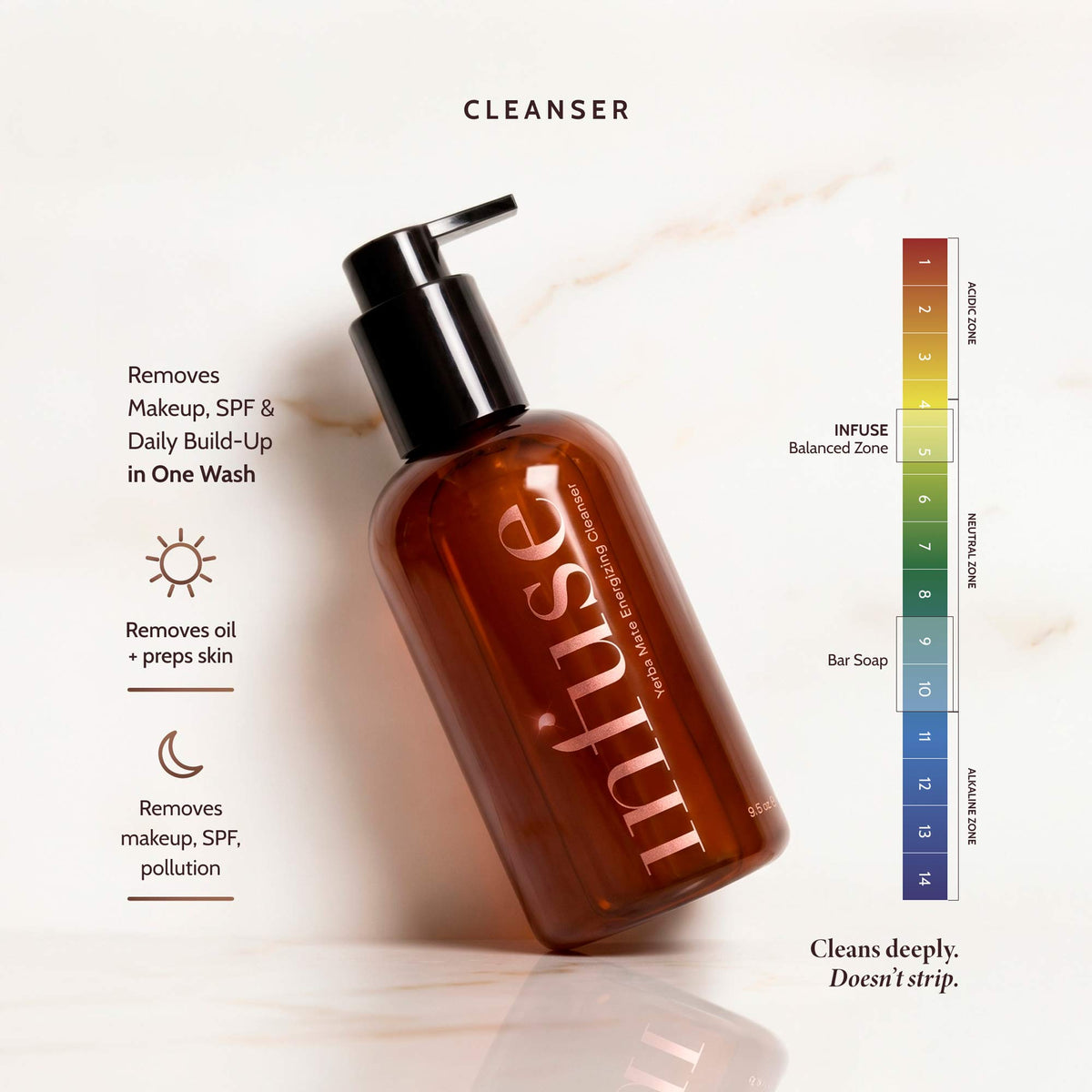
A formula like Yerba Mate Energizing Cleanser works well because it removes impurities without stripping the skin; something your barrier will thank you for mid-flight.

Step 2: Layer Hydration; Don’t Chase It
Hydration isn’t a one-time event. It’s a system.
Look for:
- Hyaluronic acid (water-binding)
- Glycerin (humectant)
- Panthenol (barrier support)
Apply a lightweight hydrating serum before takeoff.
Step 3: Lock It In
Here’s where most people miss the point.
Hydration without sealing = evaporation.
Use a moisturizer that reinforces the barrier. When considering ingredients to look for in a night cream, think:
- Ceramides
- Peptides
- Squalane
A formula like Yerba Mate Night Revival Cream works particularly well on long-haul flights because it supports overnight repair; even if “overnight” happens somewhere above the Atlantic.
Step 4: Eye Area = First to Show Fatigue
Cabin dryness loves the under-eye area.
A targeted product like Yerba Mate Radiance Eye Cream helps reduce the look of fatigue while maintaining hydration where skin is naturally thinner.
Step 5: Skip the Over-Doing
This is not the time for:
- Exfoliating acids
- Retinoids
- Heavy makeup
Your skin is in defense mode. Respect that.
What to Buy for Skincare on a Long Flight
Think intentional, not excessive.
Your in-flight kit should include:
- Gentle cleanser (travel size)
- Hydrating serum
- Barrier-supporting moisturizer
- Eye cream
- Lip balm
And yes, pack it smart; an Infuse Reusable Tote Bag keeps everything organized without turning your seat into a countertop.
The Role of Yerba Mate in In-Flight Skincare
Let’s talk about Yerba Mate; not as a trend, but as a functional ingredient.
Yerba Mate Benefits for Skin
- Rich in antioxidants: helps combat environmental stress
- Supports circulation: reduces dullness
- Energizing effect: improves the look of tired skin
In an environment that actively depletes your skin, ingredients like this don’t just perform; they stabilize.
Common Mistakes to Avoid
1. Drinking Coffee Instead of Water
Caffeine without hydration? Your skin notices.
2. Applying Products on Dirty Skin
Layering over bacteria = irritation risk.
3. Overloading with Products
More isn’t better. Smarter is.
4. Ignoring Internal Hydration
Topicals help; but hydration starts from within.
Minimalist In-Flight Routine (That Actually Works)
If you want the short version:
- Cleanse before boarding
- Apply hydrating serum
- Seal with moisturizer
- Use eye cream mid-flight
- Reapply moisturizer if needed
That’s it. Elegant, efficient, effective. Very Infuse skincare energy.