How to Repair Skin Barrier for Mature Skin: A Science-First Guide

A damaged skin barrier in mature skin often shows up as dryness, tightness, or irritation. Repairing it means restoring lipids, reducing inflammation, and rebuilding strength with barrier-repair ingredients like ceramides, peptides, and niacinamide. Think of it as strength training for your skin; not a quick fix.
Strong Skin Is Always in Style
The truth? Your skin doesn’t suddenly “give up” after 40 — it just gets more discerning. Like a woman who’s refined her taste over time, mature skin knows what it needs: support, not struggle.
If your face feels drier than usual or looks a little more sensitive than it used to, chances are your skin barrier is asking for reinforcement. And the good news? Science has plenty to say about how to restore it; no miracles, no gimmicks, just results.
In this guide, we’ll break down what the skin barrier really does, why it weakens with age, and how to repair it using the kind of skincare that works smarter, not harder.
Read more: IV Therapy
What Exactly Is the Skin Barrier?
Think of your skin barrier as your body’s most stylish armor; a microscopic mix of lipids, proteins, and cells that keep the good stuff (like moisture) in and the bad stuff (like pollutants and irritants) out.
In biological terms, it’s your stratum corneum, the top layer of your skin that acts like a brick wall: the skin cells are bricks, and lipids like ceramides, cholesterol, and fatty acids are the mortar holding it all together.
When that wall cracks; due to aging, over-exfoliation, stress, or harsh products, you get transepidermal water loss (TEWL). That’s what causes dryness, irritation, and that “nothing works anymore” feeling.
Why Mature Skin Needs a Different Kind of Repair
As we age, the skin naturally produces fewer lipids and less collagen. Hormonal changes, especially post-menopause, can reduce sebum and slow cell turnover — leaving your skin barrier more vulnerable.
That’s why what worked at 25 (a foaming cleanser and a swipe of toner) might backfire at 45. Mature skin requires barrier repair that focuses on replenishment and strength, not stripping and resurfacing.

Related products:
The Science of Repair: What Actually Works
When it comes to repairing a damaged skin barrier, less is more — but smarter is everything. Here’s what research shows truly supports the barrier for mature skin:
1. Ceramides: The Lipid Architects
Ceramides are the unsung heroes of barrier repair. They rebuild the “mortar” that holds your skin together. Look for multi-ceramide complexes that restore lipid balance and reduce TEWL over time.
2. Niacinamide: The Calm Restorer
Niacinamide (vitamin B3) is a multitasking powerhouse; it helps your skin produce more ceramides, improves elasticity, and evens tone. Perfect for mature skin that’s both dry and sensitive.
3. Peptides: Strength Training for Skin
Think of peptides as personal trainers for your skin barrier. They signal your cells to produce collagen and elastin; boosting firmness and repair without irritation.
4. Fatty Acids and Cholesterol: The Rebuilders
A healthy barrier needs the right lipid ratio. Ingredients like linoleic acid, squalane, and cholesterol mimic your skin’s natural oils to bring back balance and resilience.
5. Microbiome Support: Balance from Within
Prebiotic and probiotic ingredients help restore your skin’s natural defense system. A balanced microbiome = a stronger barrier and fewer flare-ups.
How to Rebuild Your Routine (and Keep It Effortless)
A complicated 10-step routine? Pass. Repairing your barrier is about smart simplicity — three or four strategic steps done consistently.
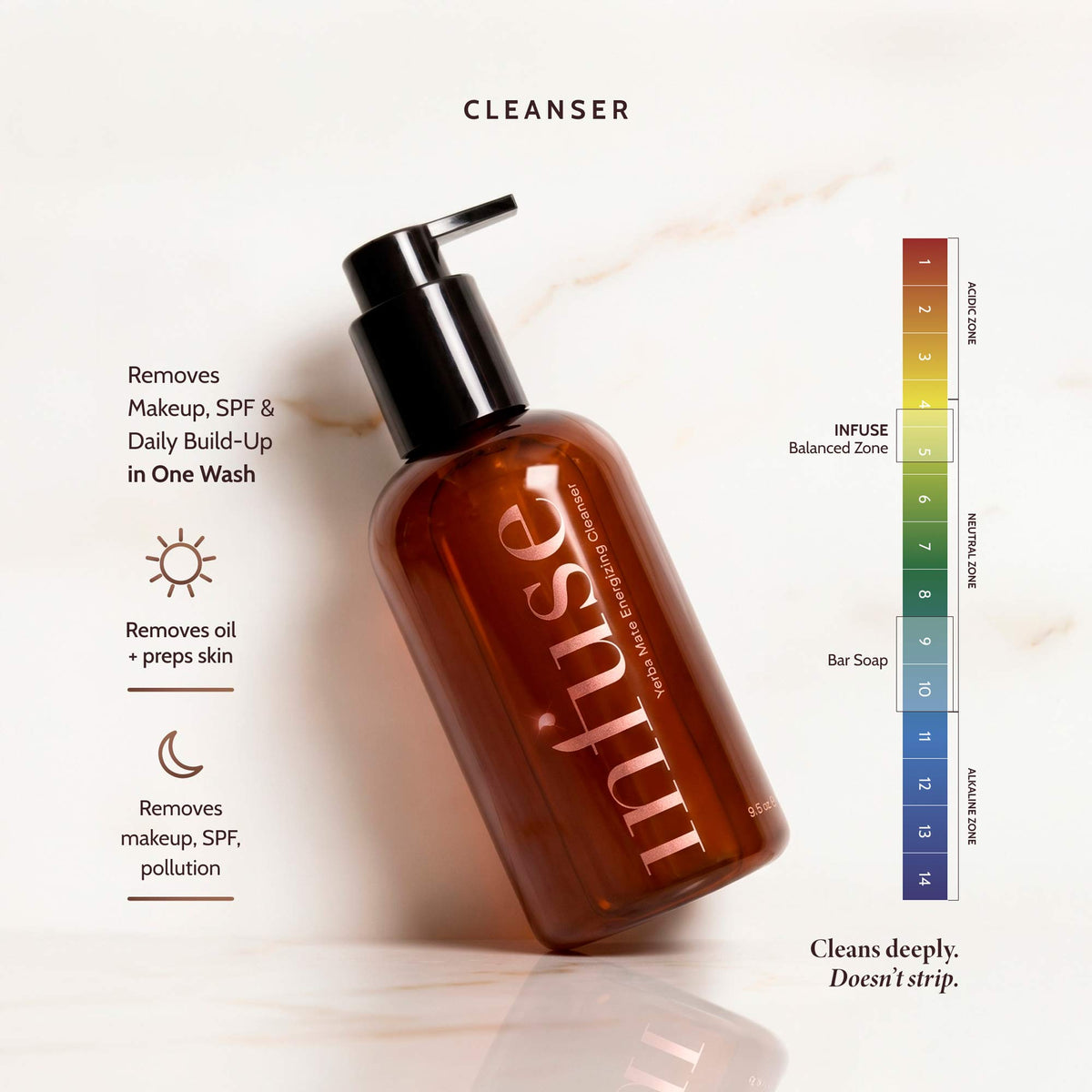
- Cleanse Gently: Use a pH-balanced, non-stripping cleanser. Avoid foaming or exfoliating cleansers when your barrier feels compromised.
- Replenish and Strengthen: Apply a serum with ceramides, niacinamide, or peptides.
- Seal and Protect: Lock in moisture with a rich, lipid-based moisturizer — think barrier cream, not lotion.
- Guard with SPF: UV damage weakens your barrier daily. Sunscreen isn’t optional — it’s reinforcement.
Pro Tip: When your skin is healing, skip active acids or retinoids for a week. Think “recovery mode,” not “overdrive.”
Common Myths About Barrier Repair
-
“If my skin feels dry, I need to exfoliate more.”
Nope; that’s like sanding a cracked wall. Hydrate first, repair second. -
“Heavier creams clog pores.”
Only if the formula is wrong for your skin. Mature skin thrives on richer, lipid-replenishing textures that mimic its natural oils. -
“You can repair the barrier overnight.”
Real strength takes time. With consistent care, you’ll see smoother, calmer skin in about two weeks.
Expert Tip: Think Longevity, Not Perfection
At Infuse, we don’t chase instant results; we build lasting resilience.
Barrier repair isn’t a trend; it’s an investment in your skin’s longevity. Because just like a classic piece in your wardrobe, strong skin never goes out of style.
Final Thought
Your skin barrier is like your legacy; built layer by layer, strengthened by consistency, and designed to last.
Repairing it isn’t about chasing youth; it’s about honoring resilience.
And that’s exactly what Infuse stands for: science-first skincare built for real strength, not surface shine.